

Rotary Tablet Press Machine | Improve Production Efficiency
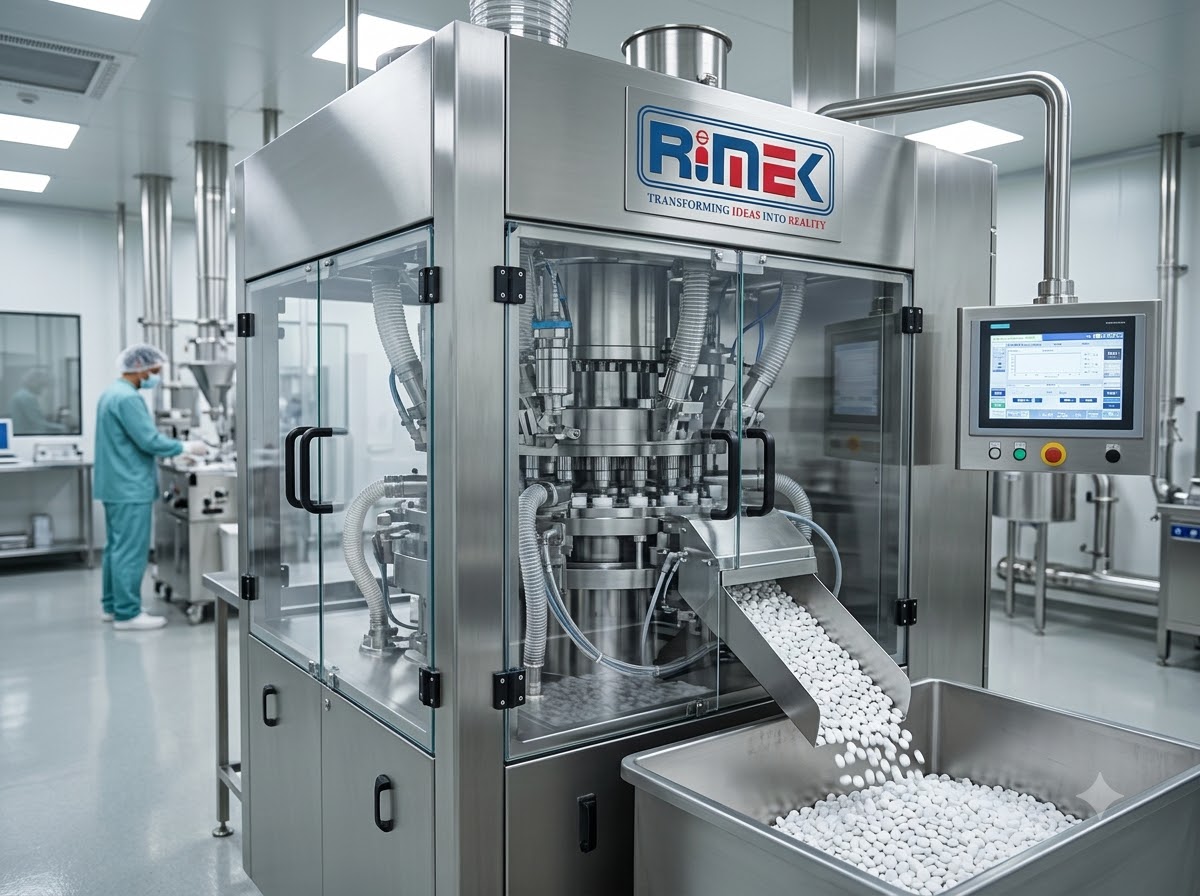
In pharmaceutical manufacturing, production efficiency depends on more than machine speed. Consistent tablet weight, uniform hardness, minimal material wastage and smooth machine operation are equally important. A well-selected Rotary Tablet Press Machine helps pharmaceutical manufacturers achieve reliable tablet production while maintaining quality standards.
A rotary tablet press is designed to compress powder or granules into tablets through a rotating turret fitted with multiple punches and dies. Unlike a single-station press, it supports continuous production through multiple compression stations, making it suitable for medium- and large-scale pharmaceutical manufacturing.
For manufacturers looking to improve output without compromising tablet quality, understanding the factors that influence rotary tablet press performance is essential.
1. Select the Right Rotary Tablet Press Machine
Choosing a machine according to production requirements is the first step towards better efficiency.
Before selecting a rotary tablet press machine, consider:
-
Required tablet production capacity per hour.
-
Tablet size, shape and thickness.
-
Number of punch stations.
-
Powder flow and compression characteristics.
-
Required compression force.
-
Production batch requirements.
An appropriately selected machine helps avoid unnecessary production delays and supports consistent operation.
2. Maintain Consistent Powder Flow
Powder flow plays an important role in tablet weight uniformity. Poor powder flow can cause inconsistent die filling, resulting in tablet weight variation.
To improve powder flow:
-
Maintain suitable granule size distribution.
-
Ensure consistent material feeding.
-
Select appropriate granulation methods.
-
Monitor hopper material levels.
-
Avoid excessive moisture or unsuitable material conditions.
Proper powder preparation helps maintain consistent filling across the compression stations.
3. Optimise Compression Force and Tablet Quality
Compression force directly influences tablet hardness, thickness and overall quality.
Excessive compression may cause defects such as capping or lamination, while insufficient compression can result in weak tablets.
Manufacturers should monitor:
-
Main compression force.
-
Pre-compression settings, where available.
-
Tablet hardness.
-
Tablet thickness.
-
Tablet weight variation.
-
Disintegration requirements.
Machine settings should be established through suitable product trials and validated manufacturing procedures.
4. Use Proper Punches and Dies
Punches and dies directly influence tablet dimensions, appearance and production consistency.
Worn or damaged tooling can contribute to sticking, picking, weight variation and other compression problems.
For better performance:
-
Use tooling suitable for the tablet design.
-
Inspect punches and dies regularly.
-
Follow recommended cleaning procedures.
-
Check for wear and surface damage.
-
Replace tooling when necessary.
Proper tooling maintenance also helps reduce unplanned production interruptions.
5. Follow Preventive Maintenance Practices
Regular maintenance helps maintain machine performance and reduces unexpected downtime.
A preventive maintenance programme should include:
-
Inspection of mechanical components.
-
Lubrication according to manufacturer recommendations.
-
Checking turret and drive components.
-
Inspection of feeding and compression systems.
-
Cleaning of product-contact areas.
-
Periodic inspection of safety systems.
Following the machine manufacturer's maintenance schedule can support longer equipment life and reliable operation.
6. Monitor Production Parameters
Monitoring important production parameters helps operators identify performance variations before they affect an entire batch.
Important parameters include:
|
Parameter |
Why It Matters |
|
Turret speed |
Influences production output |
|
Tablet weight |
Supports dosage consistency |
|
Compression force |
Influences tablet hardness |
|
Tablet thickness |
Maintains product dimensions |
|
Rejection rate |
Helps identify quality issues |
|
Machine downtime |
Affects overall productivity |
Production teams should record these parameters and review trends during routine manufacturing operations.
7. Train Machine Operators
Even advanced pharmaceutical machinery requires trained operators.
Operators should understand machine setup, tooling installation, operating procedures, cleaning requirements and routine troubleshooting.
Proper training helps reduce setup errors, improve changeover efficiency and support consistent machine operation.
8. Choose a Rotary Tablet Press Machine Based on Production Requirements
Before investing in a rotary tablet press machine, pharmaceutical manufacturers should evaluate the following factors:
-
Production capacity and batch size.
-
Number of punch stations.
-
Tablet dimensions and design.
-
Compression force requirements.
-
Ease of cleaning and maintenance.
-
Availability of technical support and spare parts.
-
Applicable GMP and regulatory requirements.
The right machine should match the actual manufacturing process rather than being selected only on the basis of maximum operating speed.
Why Choose Karnavati Engineering for Pharmaceutical Machinery?
Karnavati Engineering provides pharmaceutical machinery solutions for manufacturers looking for reliable tablet production equipment.
When evaluating a Rotary Tablet Press Machine, manufacturers should consider production requirements, machine configuration, operational reliability and technical support.
Explore Karnavati Engineering's pharmaceutical machinery range to identify equipment suitable for your tablet manufacturing requirements.
Frequently Asked Questions
1. What is a Rotary Tablet Press Machine?
A rotary tablet press machine is pharmaceutical equipment that compresses powder or granules into tablets using multiple punches and dies arranged around a rotating turret.
2. How does a rotary tablet press improve production efficiency?
It uses multiple compression stations to produce tablets continuously, supporting higher production output compared with a single-station tablet press.
3. What factors affect rotary tablet press production capacity?
Production capacity depends on turret speed, number of punch stations, die filling performance, material properties and tablet specifications.
4. How can tablet weight variation be reduced?
Consistent powder flow, appropriate granule properties, correct machine settings and regular monitoring of die filling help reduce tablet weight variation.
5. What maintenance does a rotary tablet press require?
Regular cleaning, lubrication, tooling inspection, mechanical checks and preventive maintenance according to manufacturer recommendations are important.
6. What is the difference between a rotary tablet press and a single-station tablet press?
A single-station press uses one compression station, whereas a rotary tablet press uses multiple stations arranged on a rotating turret, supporting higher production capacity.
Improving pharmaceutical tablet production efficiency requires the right machinery, consistent material preparation, appropriate compression settings and regular maintenance. A properly selected Rotary Tablet Press Machine can support consistent tablet production, reduce avoidable interruptions and improve manufacturing operations.
Pharmaceutical manufacturers should evaluate their production requirements and tablet specifications before selecting compression equipment