

Capsule Filling Machines
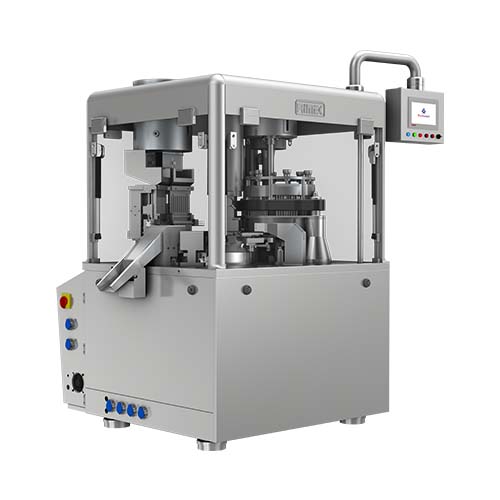
The capsule filling machine price in India varies according to production capacity, automation level, capsule size, filling technology, machine configuration and application requirements. Pharmaceutical, nutraceutical, Ayurvedic and healthcare manufacturers can choose from R&D, semi-automatic and fully automatic capsule filling machines based on their production requirements.
A capsule filling machine is used to fill empty hard capsules with powders, granules, pellets, tablets or other suitable formulations. Modern capsule filling equipment automates important operations such as capsule feeding, separation, filling, closing and discharge, helping manufacturers achieve consistent production and improved efficiency.
This guide explains the major factors affecting capsule filling machine cost, different machine types, production capacity, applications and important considerations when selecting capsule filling machinery in India.
What Is a Capsule Filling Machine?
A capsule filling machine is pharmaceutical processing equipment designed to accurately fill empty capsules with a predetermined quantity of formulation.
Depending on the machine configuration, it can be used for:
-
Powder filling
-
Granule filling
-
Pellet filling
-
Tablet filling
-
Microtablet filling
-
Combination filling applications
Automatic capsule filling machines can perform multiple operations with minimum manual intervention. This makes them suitable for pharmaceutical and nutraceutical manufacturers requiring consistent production and controlled filling performance.
Capsule Filling Machine Price in India
There is no single fixed capsule filling machine price because different machines are designed for different production requirements.
The investment can vary depending on whether the machine is intended for laboratory development, pilot-scale manufacturing, small production batches or high-volume commercial production.
|
Machine Type |
Typical Application |
Investment Level |
|---|---|---|
|
Manual Capsule Filling Machine |
Laboratory and small batches |
Lower |
|
Semi-Automatic Machine |
Small and medium production |
Moderate |
|
R&D / Pilot Machine |
Product development and trials |
Moderate |
|
Automatic Capsule Filling Machine |
Commercial production |
Higher |
|
High-Speed Automatic Machine |
Large-scale pharmaceutical production |
Premium |
Online prices should therefore be considered indicative only. The actual capsule filling machine cost depends on the selected model, configuration, accessories and production requirements.
What Affects Capsule Filling Machine Cost?
Several technical factors influence the final price of capsule filling equipment.
1. Production Capacity
Production capacity is one of the most important factors.
A machine designed for laboratory or R&D applications does not require the same production capacity as equipment used in a large pharmaceutical manufacturing plant.
For example, Rimek offers capsule filling machines for different production requirements, including its MINICAP R&D/pilot-scale machine and higher-capacity automatic CF-series machines.
Selecting the correct output is important because an undersized machine can restrict production growth, while excessive capacity can increase unnecessary capital investment.
2. Automation Level
The level of automation also has a direct impact on the automatic capsule filling machine price.
Manual systems require greater operator involvement, while semi-automatic machines provide a balance between manual operation and automation.
Fully automatic capsule filling machines can automate capsule feeding, separation, filling, closing and discharge. They are generally preferred for commercial pharmaceutical production where higher productivity and consistent operation are required.
3. Capsule Size
Different pharmaceutical products may use different capsule sizes.
Depending on the model, capsule filling machines can support multiple capsule sizes, allowing manufacturers to produce different formulations on the same equipment.
If a facility manufactures several products, capsule-size flexibility and convenient changeover can provide significant operational advantages.
4. Type of Filling Material
The formulation being filled is another important consideration.
Different dosing arrangements may be required for powders, granules, pellets, tablets and combination formulations.
For this reason, the capsule filling machine price can vary according to the required filling technology and additional dosing components.
5. Filling Accuracy
Filling accuracy is particularly important in pharmaceutical manufacturing.
An efficient capsule filling machine should provide consistent dosing while minimizing product wastage. Advanced dosing systems are designed to maintain uniform filling performance during continuous production.
Therefore, manufacturers should consider filling accuracy and repeatability along with the initial machine price.
6. Machine Construction
Machine construction and product-contact materials are also important for pharmaceutical applications.
Suitable stainless-steel construction, hygienic design and accessible product-contact areas can make cleaning and maintenance easier.
The machine should be selected according to the manufacturing environment, product characteristics and applicable pharmaceutical production requirements.
Automatic Capsule Filling Machine Price vs Semi-Automatic
The choice between semi-automatic and fully automatic equipment depends mainly on production volume and automation requirements.
A semi-automatic capsule filling machine can be suitable for smaller production requirements where some manual operation is acceptable. It generally requires lower initial investment.
A fully automatic capsule filling machine is more suitable for medium- to large-scale production. It can reduce manual intervention, improve production consistency and support higher output.
For a growing pharmaceutical business, the higher investment in automation may provide better long-term value through increased productivity and reduced dependence on manual operations.
R&D and Pilot-Scale Capsule Filling Machines
R&D departments and pharmaceutical formulation laboratories may not require high-speed production machinery.
A compact capsule filling machine designed for research and pilot-scale applications can provide flexibility for product development, testing and small-batch production.
Rimek's MINICAP, for example, is designed for R&D and pilot-scale applications and provides a compact solution for formulation development and smaller production requirements.
This type of equipment can be useful for companies developing new pharmaceutical, nutraceutical or healthcare formulations before moving to large-scale commercial manufacturing.
High-Speed Automatic Capsule Filling Equipment
Large pharmaceutical manufacturing facilities generally require higher production capacity and greater automation.
High-speed capsule filling equipment can integrate automated capsule feeding, separation, dosing, closing and discharge operations. Advanced machines may also include PLC-based controls, touchscreen interfaces, monitoring systems and quick-change arrangements.
Rimek's capsule filling range includes different automatic models designed for varying production capacities, allowing manufacturers to select equipment according to their required output.
For high-volume production, the machine should be evaluated according to total productivity, reliability, filling accuracy and operating efficiency rather than purchase price alone.
Capsule Filling Machine Applications
Capsule filling machinery is widely used in industries where accurate filling of hard capsules is required.
Common applications include:
-
Pharmaceutical manufacturing
-
Nutraceutical production
-
Ayurvedic formulations
-
Herbal products
-
Dietary supplements
-
Healthcare products
-
R&D and formulation development
The appropriate machine configuration depends on the formulation, capsule size, required output and production environment.
How to Choose the Right Capsule Filling Machine?
Choosing the right machine starts with understanding the actual production requirement.
Manufacturers should consider:
Production capacity: Determine the required capsules per hour and expected production volume.
Formulation: Identify whether the product contains powder, granules, pellets, tablets or a combination.
Capsule sizes: Check the required capsule sizes and changeover requirements.
Automation: Select manual, semi-automatic, R&D or fully automatic equipment according to production needs.
Filling accuracy: Consider the required dosing consistency and product wastage.
Future expansion: If production is expected to increase, select equipment that can accommodate future requirements.
Technical support: Reliable installation, commissioning, spare parts and after-sales service can contribute significantly to long-term machine performance.
Why Choose a Capsule Filling Machine Manufacturer in India?
Purchasing directly from an experienced capsule filling machine manufacturer in India can provide advantages throughout the equipment lifecycle.
A specialized manufacturer can assist with machine selection, production planning, capsule-size compatibility, filling technology, installation, commissioning, training and technical support.
Manufacturers can also provide customized configurations according to specific pharmaceutical and nutraceutical production requirements.
This makes manufacturer experience an important factor when evaluating the overall capsule filling machine cost.
Why Choose Karnavati Engineering / Rimek?
Karnavati Engineering has been associated with pharmaceutical machinery manufacturing for several decades and offers capsule filling solutions under the Rimek brand.
Its range includes R&D and pilot-scale machines as well as automatic capsule filling machines designed for higher production requirements.
The equipment is intended for pharmaceutical and related manufacturing applications where controlled filling, consistent production and reliable machine operation are important.
By offering different machine configurations and production capacities, Rimek enables manufacturers to select capsule filling equipment according to their individual requirements.
Capsule Filling Machine Price: Final Considerations
The capsule filling machine price in India depends on much more than the basic machine model. Production capacity, automation, capsule size, formulation type, dosing technology, filling accuracy, construction and additional equipment can all influence the final investment.
For small-scale production and product development, an R&D or pilot-scale machine can provide the required flexibility. For commercial pharmaceutical manufacturing, an automatic capsule filling machine can offer higher productivity and reduced manual intervention.
Instead of selecting equipment based only on the lowest price, manufacturers should evaluate production requirements, machine performance, operating efficiency and long-term support.
Choosing the right capsule filling equipment can help pharmaceutical and nutraceutical manufacturers improve production consistency, optimize operating efficiency and prepare their manufacturing facility for future growth.
If you are looking for reliable capsule filling machinery in India, Karnavati Engineering / Rimek provides capsule filling solutions for R&D, pilot-scale and commercial pharmaceutical production requirements.
Frequently Asked Questions
What is the capsule filling machine price in India?
The price varies according to machine type, production capacity, automation, capsule size, filling technology and configuration. A manufacturer quotation based on specific requirements provides a more accurate price.
What is the automatic capsule filling machine price?
The automatic capsule filling machine price depends mainly on production capacity, automation, dosing system, capsule-size compatibility and additional features. High-capacity machines generally require a greater investment.
What factors affect capsule filling machine cost?
Production capacity, automation level, filling material, capsule size, filling accuracy, machine construction, dosing technology, change parts and additional features can all affect the capsule filling machine cost.
Which capsule filling machine is suitable for small production?
R&D or pilot-scale capsule filling machines are generally suitable for product development, laboratory trials and smaller production requirements. The appropriate model depends on the required output and formulation.
Which machine is suitable for large-scale pharmaceutical production?
Large-scale manufacturers generally require fully automatic, high-capacity capsule filling machines with automated dosing, capsule handling and production controls.
Can capsule filling machines handle different formulations?
Yes. Depending on the machine configuration and dosing system, capsule filling equipment can be designed for powders, granules, pellets, tablets and other suitable formulations.
How do I get an accurate capsule filling machine price?
The most accurate price is obtained by providing the manufacturer with details such as required production capacity, capsule sizes, formulation type, automation level and specific machine requirements.