

Roll Compactor Machine: Working Principle, Applications and How to Choose One
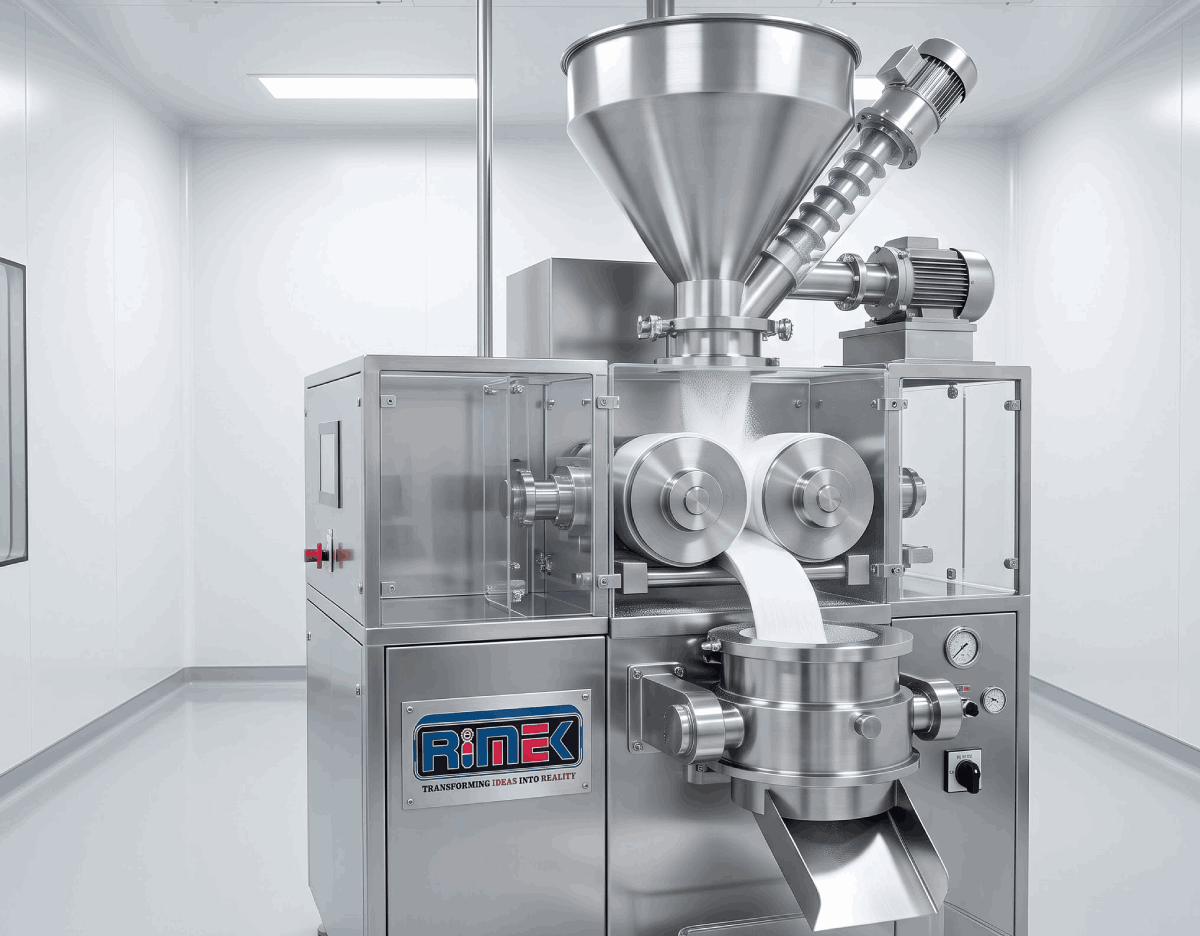
A roll compactor machine is used for dry granulation in pharmaceutical and nutraceutical manufacturing. It turns fine, poorly flowing powders into free-flowing granules without water or solvents, which makes it a practical choice when a product is sensitive to moisture or heat. This guide explains how a roll compactor works, where it is used and what to check before you buy one.
What Is a Roll Compactor Machine?
A roll compactor machine presses powder between two counter-rotating rolls to form a dense ribbon, sheet or flakes. These are then milled into granules of a controlled size. Because no liquid binder is added, there is no wetting and no drying step. This process is called dry granulation, or roller compaction.
How a Roll Compactor Works
1. Feeding: a feed system, usually a screw feeder, delivers powder steadily into the gap between the rolls.
2. Compaction: the rolls apply pressure and squeeze out air, forming a compact ribbon.
3. Milling: a mill breaks the ribbon into granules, and a sieve separates granules of the right size from fines.
4. Blending and compression: the granules are blended with a lubricant and compressed into tablets on a tablet compression machine, or used for capsule filling.
When to Choose Dry Granulation
Roll compaction is often chosen when:
• the active ingredient or excipients are sensitive to moisture or heat
• you want to avoid a drying step and the time and energy that go with it
• the powder is fine or flows poorly and needs better flow for tablet or capsule filling
Wet granulation with a high shear mixer granulator or fluid bed processor is still better for some formulations, so the right choice depends on your material and on trials.
Where Roll Compactors Are Used
Roll compactors are used for pharmaceutical tablets and capsules, nutraceutical and herbal products, and other powder products that need to be turned into granules before further processing.
How to Choose a Roll Compactor Machine
• Output: match capacity to your batch size, including lab-scale needs for R&D.
• Roll design and pressure: roll width, pressure control and gap settings should suit your material.
• Feed system: consistent feeding is key to uniform ribbon quality.
• Milling and sieving: check that the granule size can be adjusted.
• Cleaning and cGMP: look for easy-to-clean contact parts, suitable materials and good documentation.
• Material trials: test your own powder before you commit.
• After-sales support: ask about installation, spares and AMC.
Where It Fits in the Production Line
A typical dry granulation line runs from roll compaction to milling and sizing, then blending, then tablet compression or capsule filling. For the full picture, read our guide on the machines required from mixing to compression.
Frequently Asked Questions
What is a roll compactor used for?
A roll compactor is used to granulate powders by dry compaction, so they flow better and can be compressed into tablets or filled into capsules.
What is the difference between a roll compactor and a wet granulator?
A roll compactor uses pressure only, with no liquid binder and no drying. A wet granulator, such as a high shear mixer granulator, adds a liquid binder and the granules must then be dried.
Is roll compaction suitable for all powders?
No. Some materials do not compact well or produce many fines, so trials on your own formulation are recommended.
Looking for a Roll Compactor Machine?
View the Rimek roll compactor or contact our team to discuss your batch size and material